

Two climate experts trained PhD students from the LSCE and LOCEAN in media communication
On 5 June, 2026, PhD students and early-career researchers from the LSCE and LOCEAN came together for a media training session organised by the climate engagement group. Created three years ago at the LSCE, this initiative explores the different forms of engagement available to scientists, their impacts, and the risks they may pose to careers. One observation came up repeatedly during the monthly seminars: many researchers would like to speak more in mainstream media but do not feel prepared to do so. Hence the idea for this training.
To guide the participants, two experienced scientists were invited: Davide Faranda and Valérie Masson-Delmotte. Both shared the wide range of their media experiences — television, radio, written press, podcasts — along with practical advice on how to approach an interview. Among the key takeaways: identify the media outlet and the country before any exchange (in Italy you look at the camera, in France at the journalist), prepare three key messages using the “ABC” method (Answer, Bridge, Communicate), and rely on a “triangle” combining a figure from one’s research, a shared value, and a solution.
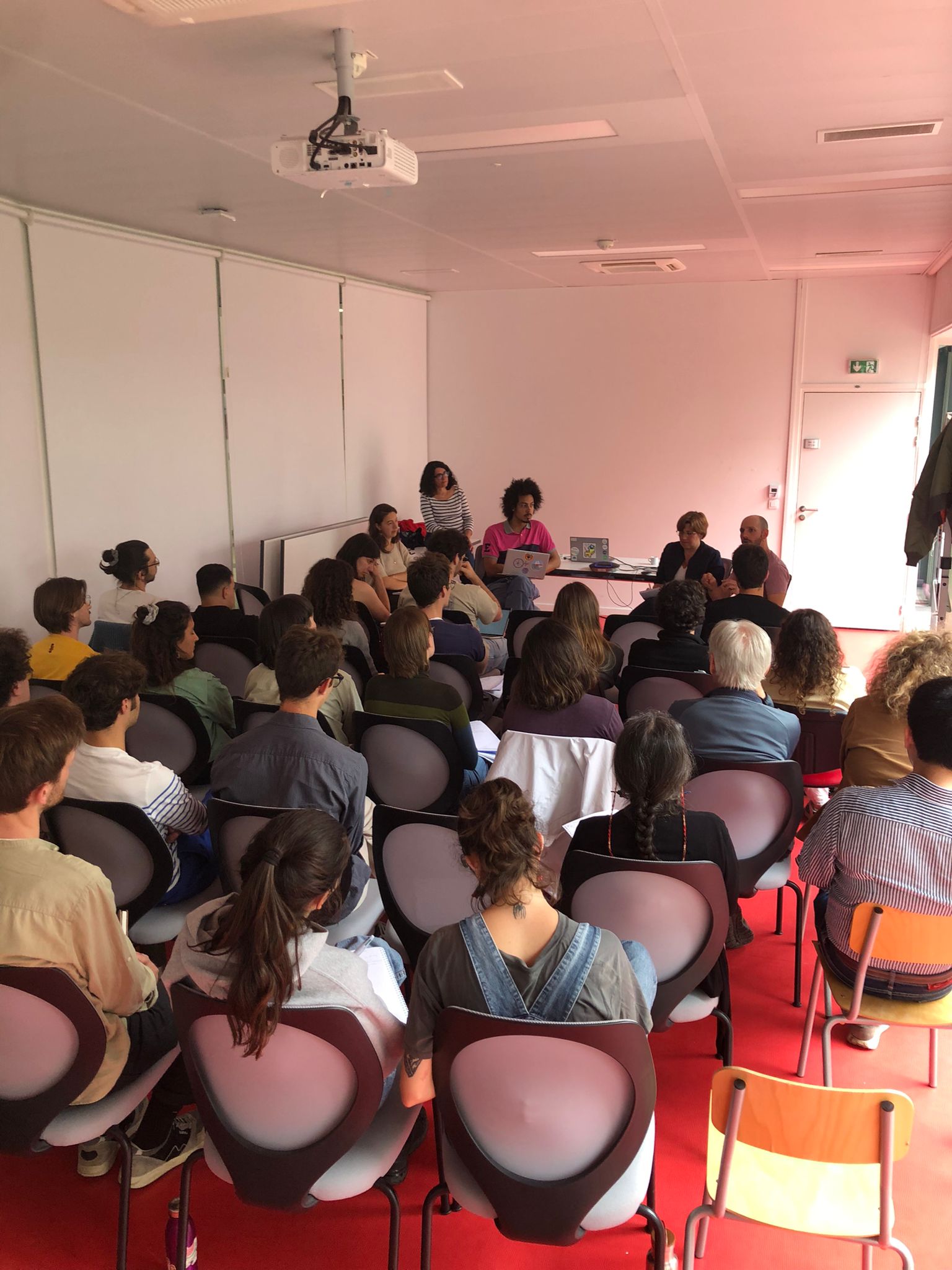
Joséphine and Nico, together with Nada Caud (LSCE communications officer), hand over to Valérie Masson-Delmotte and Davide Faranda, who share their experiences with the media. © Elsa Abs
The speakers also discussed their boundaries: turning down traps and unbalanced panels, clearly stating when a remark is “off the record,” staying within one’s field of expertise, and knowing how to say “I don’t know.” Valérie Masson-Delmotte stressed the importance of speaking as a scientist, without drifting into activism, while Davide Faranda recalled that an interview remains a wonderful opportunity to reach audiences one would never otherwise meet.
The session ended with a hands-on workshop: each participant wrote their key message, formulated a question for their neighbour, then answered it while steering back to their own research topic. A playful exercise to put the day’s techniques into practice on the spot.
More