

Fukushima, 15 years on: ecological and social changes in the region
Fifteen years after the Fukushima nuclear disaster, radioactivity levels in the environment have fallen significantly. However, researchers have shown that decontamination has not eliminated the problems; it has merely shifted them elsewhere. At the international and interdisciplinary Mitate Lab (CEA/CNRS/Fukushima University), they are analysing, in particular, the ecological and social changes taking place in the region.
The infection is still spreading
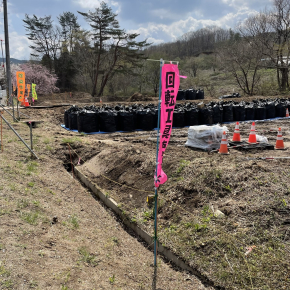
Since 2011, extensive decontamination work has been carried out in the residential and agricultural areas of Fukushima to enable the return of residents. Concentrations of caesium-137, a radioactive isotope released during the accident, have consequently fallen significantly.
In this mountainous region, which is subject to heavy rainfall and typhoons, the soil is prone to erosion. Soil particles to which caesium-137 is bound are then carried into rivers and across catchment areas, a phenomenon exacerbated by the resumption of human activities. Furthermore, the forests, which cover the majority of the territory, have not been decontaminated and are thought to still store around two-thirds (67%) of the caesium-137 released in the accident1: the preservation of the forests is a key issue.
By analysing sediments from a lake located in the contaminated area, the researchers demonstrated that the caesium-137 fluxes measured after decontamination remained comparable to those observed prior to these operations. “The dynamics of fluxes sometimes follow counter-intuitive patterns: decontamination reduces stocks, but it does not necessarily lead to a significant decrease in fluxes,”2 explains Olivier Evrard, a CEA geochemist at the Laboratory of Climate and Environmental Sciences3.
These observations confirm the significance of contamination transfer via water. “They have led, more broadly, to the integration of this pathway into French post-accident management doctrine, which was previously focused on atmospheric dispersion,” continues the researcher.
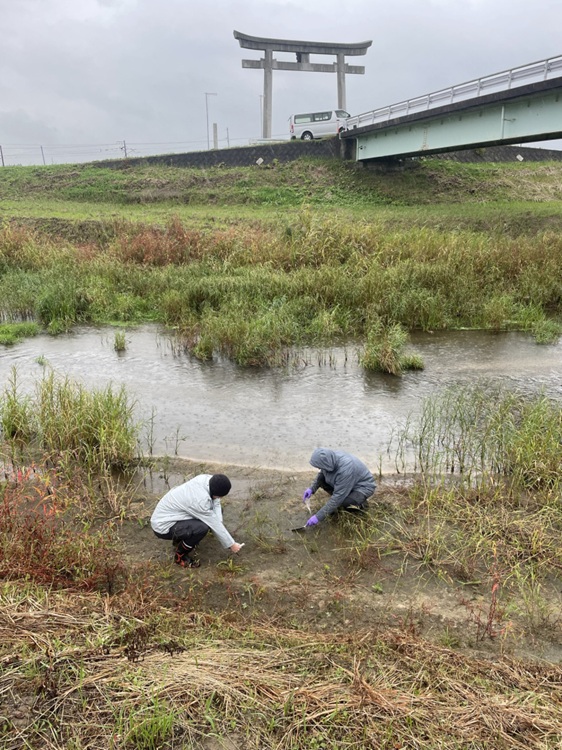
Monitoring levels of radioactive contamination in the rivers of Fukushima. © Olivier Evrard
A reconstruction that raises questions
Research in the environmental humanities shows that decontamination operations and the policy of reopening the former evacuation zone have also profoundly transformed the local landscape. “They have led to the destruction of many traditional villages and the local culture,” explains Cécile Asanuma-Brice, a CNRS urban planning researcher and director of the Mitate Lab. The ongoing reconstruction projects have been inspired by urban models borrowed from those of the global city, which are very different from the rural organisation that existed before the disaster4.
The result: these costly interventions did not lead to the return of the original inhabitants. Government surveys had shown that they did not wish to return. A recent survey of more than 3,000 former residents has revealed why. “This is mainly due to the destruction of their homes, the loss of their community and family ties in these deserted areas, and the lack of essential services, particularly hospitals,” the researcher emphasises.
Faced with this low return rate, the Japanese authorities have introduced financial incentives (free housing, income supplements, etc.) to repopulate the area. Ultimately, it is mainly people in precarious economic circumstances who agree to live in a potentially contaminated environment in exchange for financial support.
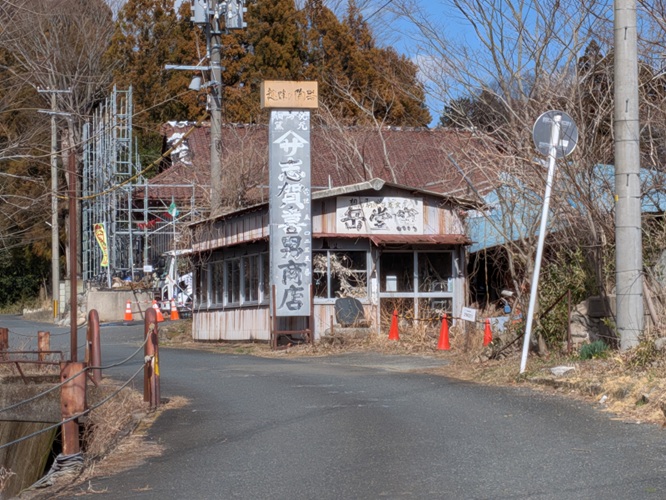
A former pottery village (Obori district, Namie village) currently being demolished. © Cécile Asanuma-Brice
A laboratory born out of disaster
These findings are the result of Franco-Japanese collaborations initiated following the accident. These led, in 2020, to an international interdisciplinary project, and then, in June 2025, to an international multidisciplinary laboratory, the Mitate Lab. “The consequences of a nuclear accident are complex and long-lasting. By their very nature, they can only be understood through a multidisciplinary approach, as everything is intertwined,” concludes Cécile Asanuma-Brice. Geochemists, hydrologists, sociologists, urban planners and ecologists are therefore working together. And it is clear that, fifteen years on, the task at hand is proving to be more extensive than anticipated.
More
« À Fukushima, la population est dans une situation inextricable » (2015)
Fukushima : un retour sous haute surveillance (2020)
Fukushima : les leçons d’une décontamination (2021)
1 Vandromme, R., et al. (2023). Lessons learnt on the impact of an unprecedented soil decontamination program in Fukushima on contaminant fluxes. PNAS 120 (43), e2301811120.
2 Les concentrations en Cs-137 ont baissé après la décontamination, mais les flux d’érosion ont augmenté (car les sols étaient moins protégés par la végétation). Au total, les flux sont restés similaires.
3 Unité CEA/CNRS/UVSQ
4 Is Urban Resilience to Industrial Crises Possible? An Analysis of the Evolution of Land Use in Fukushima since 2011, Asian Studies, DOI: 10.5772/intechopen.1011750
Contact
Olivier Évrard, LSCE-IPSL •
Source: Anaïs Culot, CNRS Terre & Univers.